The AI Tools Transforming How Businesses Connect And Protect
28th Sep '26
Anyleads Team
5 minutes read
The AI Tools Transforming How Businesses Connect And Protect
Artificial intelligence is rapidly changing how modern companies handle daily operations and defend sensitive networks. Modern businesses need tools that automate communication while keeping sensitive customer data safe from sophisticated digital attacks.
Managing high volumes of customer inquiries often drains internal resources and leads to long response times. Modern artificial intelligence platforms analyze inbound messages in real time to categorize requests and direct them to the appropriate team members instantly.
Automated routing systems learn from previous interactions to improve their accuracy over time. This continuous learning reduces manual sorting tasks and helps employees focus on resolving complex issues faster.
Defending Email Networks Automatically
Email remains the primary attack vector for enterprise security breaches worldwide. Deploying Saicom and other solutions that work around the clock to detect, block, and remediate phishing, BEC, and ransomware threats keeps corporate inboxes clean and secure. Organizations can drastically reduce human error by letting intelligent filters evaluate incoming emails in real time.
Security platforms inspect header data, domain reputation, and message body text for subtle red flags. Automated quarantine policies isolate malicious messages instantly, preventing employees from accidentally opening dangerous links.
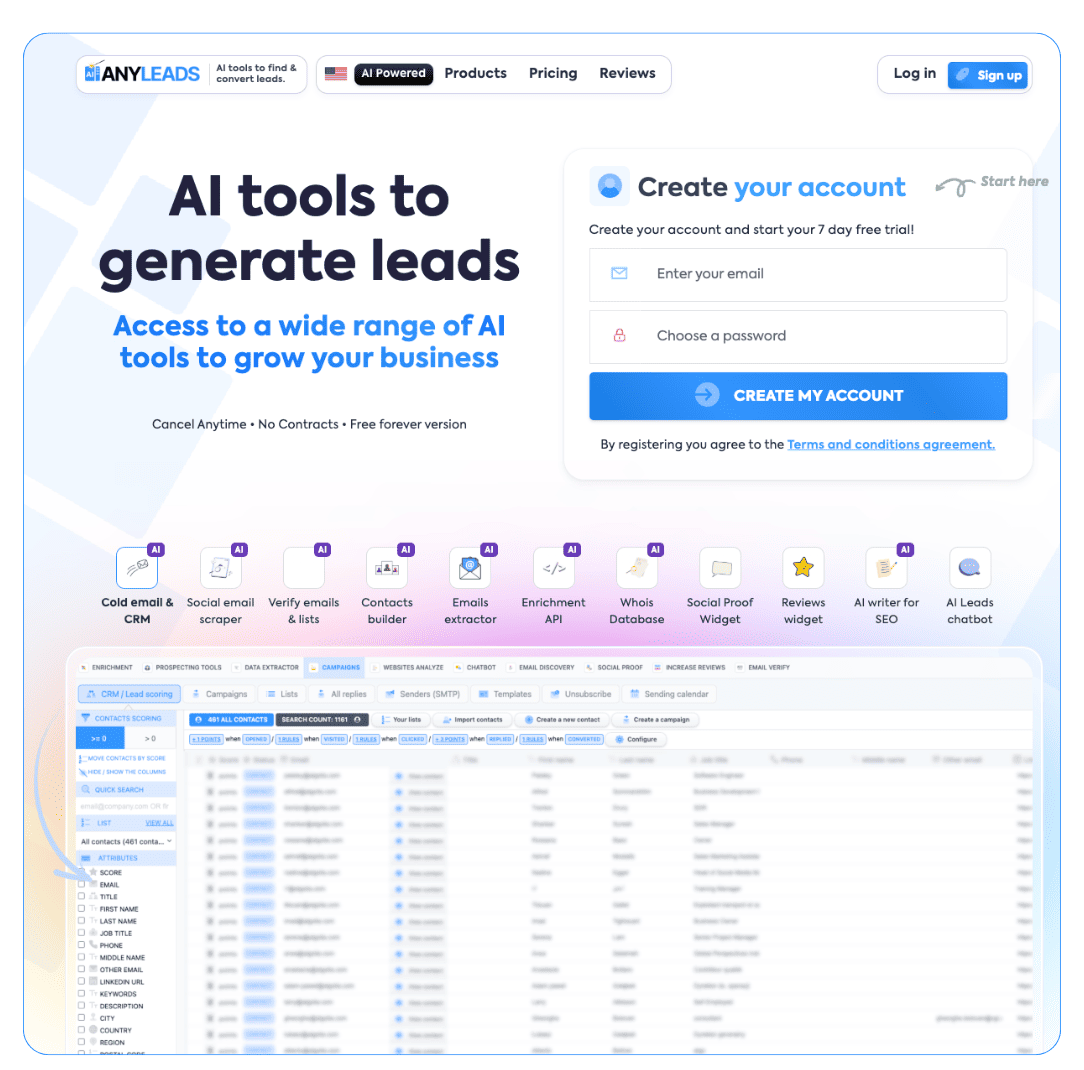
AI tools to find leads
Send emails at scale
Access to 15M+ companies
Access to 700M+ contacts
Data enrichment
AI SEO writer
Public professional emails
Advanced Data Privacy Mechanisms
Protecting proprietary information requires system security that goes beyond standard password defenses. Artificial intelligence models continuously scan internal databases to spot unusual data movement or unauthorized access attempts.
These security systems flag suspicious activity before data exfiltration occurs. By constantly monitoring user behavior patterns, companies keep their operational workflow smooth while keeping core intellectual property safe.
Predictive Analytics for Security Threats
Predictive analytics allow security systems to identify vulnerabilities before attackers exploit them. By reviewing historical threat data, artificial intelligence forecasts potential attack vectors and alerts IT administrators.
Proactive risk assessment lets organizations patch system weaknesses ahead of time. Security teams save hours of manual analysis by letting intelligent software process millions of system events every single day.
Neutralizing Fraud and Ransomware
Business email compromise attacks rely on social engineering to trick employees into transferring funds. Machine learning algorithms analyze communication style and tone to verify sender identity beyond standard domain checks.
Flagging altered banking details in routine vendor invoices
Detecting spoofed executive display names across internal channels
Inspecting incoming file attachments for hidden executable scripts
A recent Kaspersky analysis revealed that AI-related lures have become more widespread among cybercriminals than traditional fake office software. Automated defenses act within milliseconds to halt file encryption processes if ransomware executes, preserving company operations.
AI tools to find leads
Send emails at scale
Access to 15M+ companies
Access to 700M+ contacts
Data enrichment
AI SEO writer
Public professional emails
Preventing Account Takeover Attacks
Cybercriminals frequently target employee credentials to gain initial access to private networks. AI security tools detect login attempts from unfamiliar locations or unusual devices to halt unauthorized access.
Behavioral analysis measures details like typing speed and navigation habits to confirm user identity. When an anomaly occurs, the system triggers multi-factor authentication checks or locks the account immediately.
Accelerating Incident Response Times
Manual incident investigation often takes hours, giving malicious software time to spread across networks. Automated response platforms gather forensic evidence, map attack paths, and isolate affected devices automatically.
According to research from Palo Alto Networks Unit 42, phishing campaigns are achieving higher conversion rates as attackers use AI to create error-free lures. Rapid automated response capabilities offset this threat by containing compromised endpoints before breaches spread.
Optimizing Customer Service Channels
Integrating AI into customer-facing platforms boosts engagement while keeping interactions secure. Natural language processing powers interactive assistants that answer complex user queries without human intervention.
These tools authenticate user identity before sharing account details or executing service changes. Secure API integrations keep customer interactions compliant with global data privacy regulations.
Automated verification of customer account history during chat sessions
Immediate masking of payment card numbers in text fields
Real-time language translation for global support operations
Instant escalation of urgent security queries to human agents
Intelligent routing ensures support teams handle sensitive customer requests with proper context. The combination of speed and security builds long-term customer trust.
AI tools to find leads
Send emails at scale
Access to 15M+ companies
Access to 700M+ contacts
Data enrichment
AI SEO writer
Public professional emails
Streamlining Administrative Workflows
Repetitive paperwork consumes valuable staff time that could be spent growing the business. Smart document processing tools extract structured data from physical receipts, contracts, and digital invoices.
Automated extraction eliminates manual data entry mistakes and speeds up approval cycles. Internal teams gain immediate visibility into operational metrics without sifting through spreadsheets.
Securing Supply Chain Communications
Modern businesses rely on interconnected supply chains, making third-party vendor access a critical risk factor. AI tools evaluate third-party network connections to verify that partners meet strict security baselines.
Continuous vendor risk monitoring catches security gaps before external breaches impact core company systems. Automated alerts inform procurement teams if a partner vendor experiences a credential leak or network anomaly.
Combining automated communication channels with intelligent threat prevention creates a stable operational foundation. Organizations maintain high productivity levels when staff members are freed from manual data checks and constant security worries.
Investing in adaptive security technologies allows companies to scale operations without expanding their risk footprint. Modern tools protect company assets, keep teams connected, and secure digital growth for years to come.
 NEW
Trusthref.com: AI Agents That Grow Your Business In Autopilot
NEW
NEW
Trusthref.com: AI Agents That Grow Your Business In Autopilot
NEW




 Send emails at scale



 AI tools to find & convert leads.